
Strategic Insights: Growth & Capital
High-level analysis to multiply your money and scale your business
Corporate Expense Automation: How AI Eliminates Capital Leakage in T&E and Operational Spend
For financial leadership in a growing enterprise, managing travel and entertainment (T&E) and decentralized purchasing is often a constant source of inefficiency. Millions of dollars are processed monthly through paper receipts, corporate credit cards lacking dynamic limits, and spreadsheets requiring hours of manual review.
The traditional expense reporting model does not just create operational delays; it creates invisible capital leakage. By the time the accounting team detects an out-of-policy expense, a duplicate subscription, or an improper charge weeks after the fact, the capital has already left the enterprise.
The Deficiencies of Manual Expense Review
Relying on good faith or post-purchase sample audits presents three direct financial risks:
Lack of Real-Time Visibility: CFOs often understand the impact of corporate spend weeks after the month-end close, preventing timely budgetary adjustments.
Friction and Productivity Loss: Employees spend hours compiling receipts, and accounting teams waste valuable time validating individual records.
Policy Non-Compliance and Internal Fraud: Unauthorized or non-compliant expenses slip by unnoticed within massive volumes of minor transactions.
The Intelligent Solution: Control Algorithms and Dynamic Cards
Modern enterprises are replacing legacy reporting with expense management platforms integrated with AI and smart corporate cards.
This infrastructure operates on three analytical pillars:
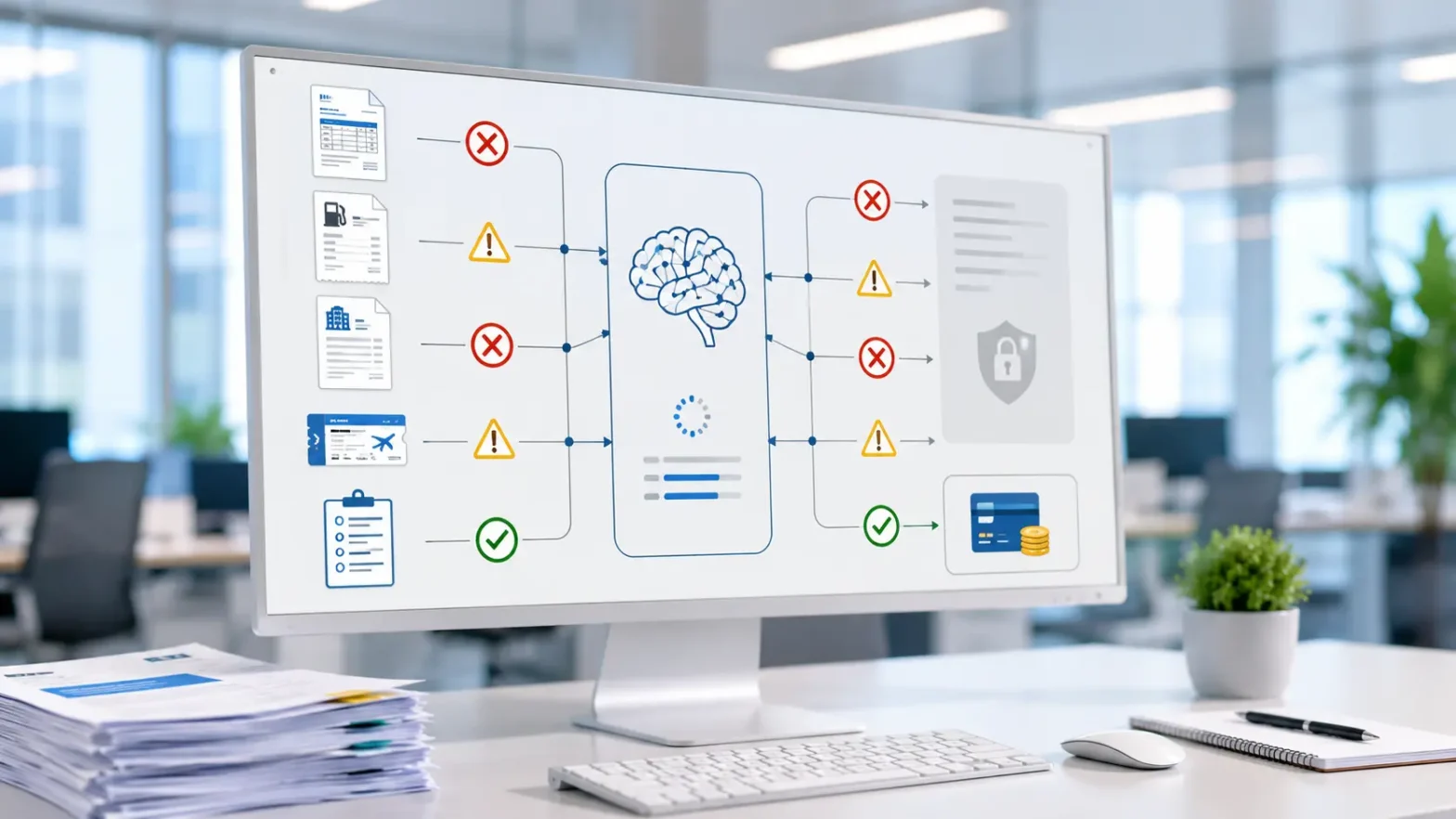
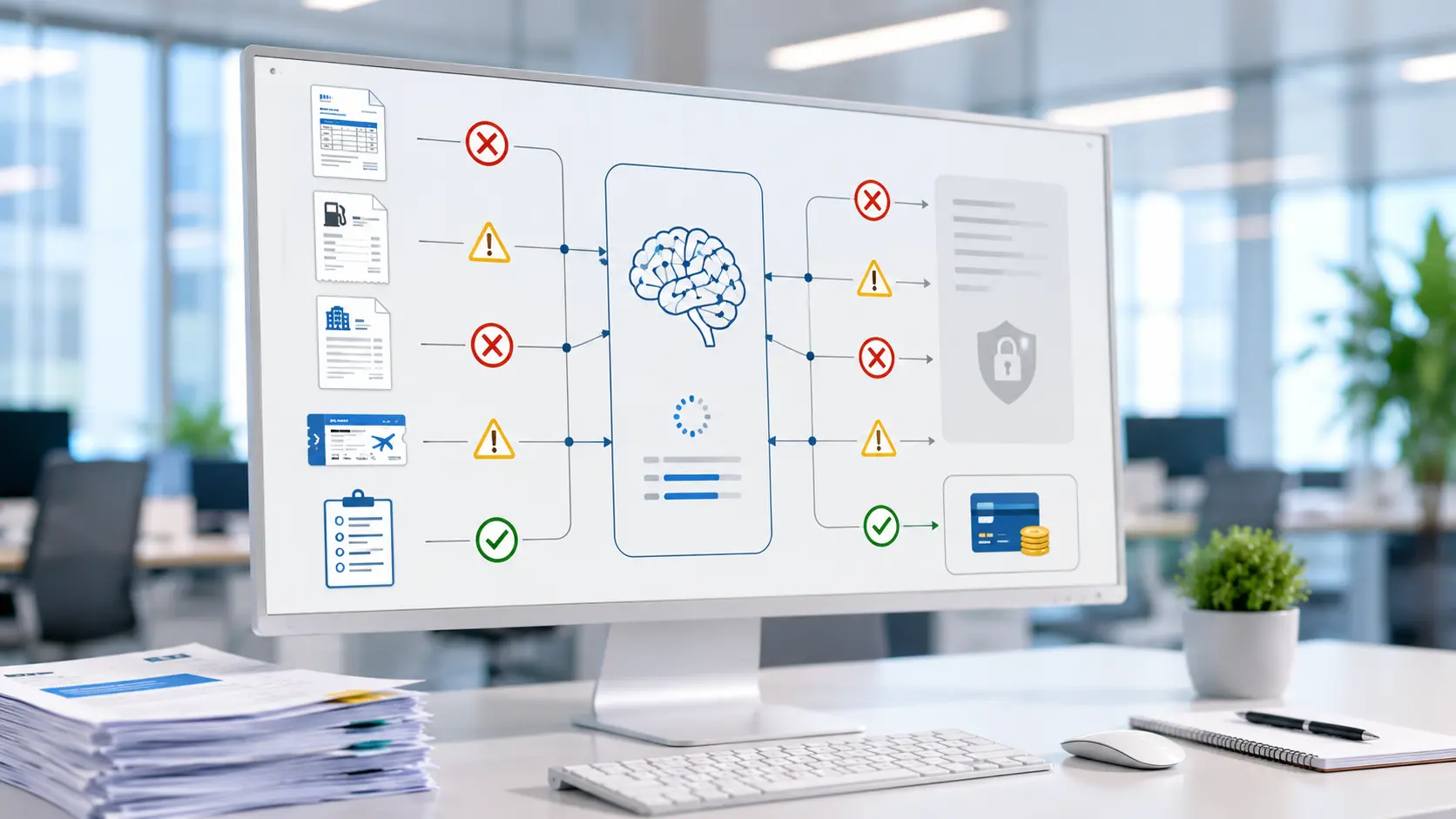
Instant Auditing and Categorization: At the moment of purchase, AI scans the digital receipt using Optical Character Recognition (OCR) and Natural Language Processing (NLP), linking it to the bank transaction and assigning the exact accounting ledger category in seconds.
Pre-Approved, Dynamic Budgetary Limits: Smart cards allow for the assignment of specific spend limits per project, employee, or vendor, automatically blocking any purchase attempt that exceeds corporate policy.
Duplicate and Anomaly Detection: Algorithms actively monitor recurring billing pipelines to identify dormant software subscriptions, double charges, or unusual spending patterns.
Impact on Efficiency and Profitability
The transition toward accounting automation for expenses delivers immediate quantitative results in operational management:
Corporate benchmarks show that organizations adopting intelligent expense management achieve a 70% reduction in T&E report processing time and a decrease of up to 5% in total operational spend by eliminating unauthorized purchases and redundant subscriptions.
By freeing the finance department from repetitive administrative tasks, personnel can focus on strategic budget analysis and negotiating master agreements with global vendors.
From Administrative Control to Financial Agility
Optimizing corporate expenses is not about restricting team operations, but granting them autonomy within clear, transparent control frameworks.
An enterprise that controls its spend in real-time reduces operational risk, maximizes applicable tax deductions through proper receipt reconciliation, and maintains strict budgetary discipline.
The Strategic Imperative
Expense management based on manual processes and retroactive reviews is an obsolete model in the digital economy. Integrating artificial intelligence and programmable corporate cards is the indispensable infrastructure for any enterprise looking to scale efficiently.
CFOs who adopt these technologies do more than protect their company’s margins; they provide their organization with unprecedented financial visibility.