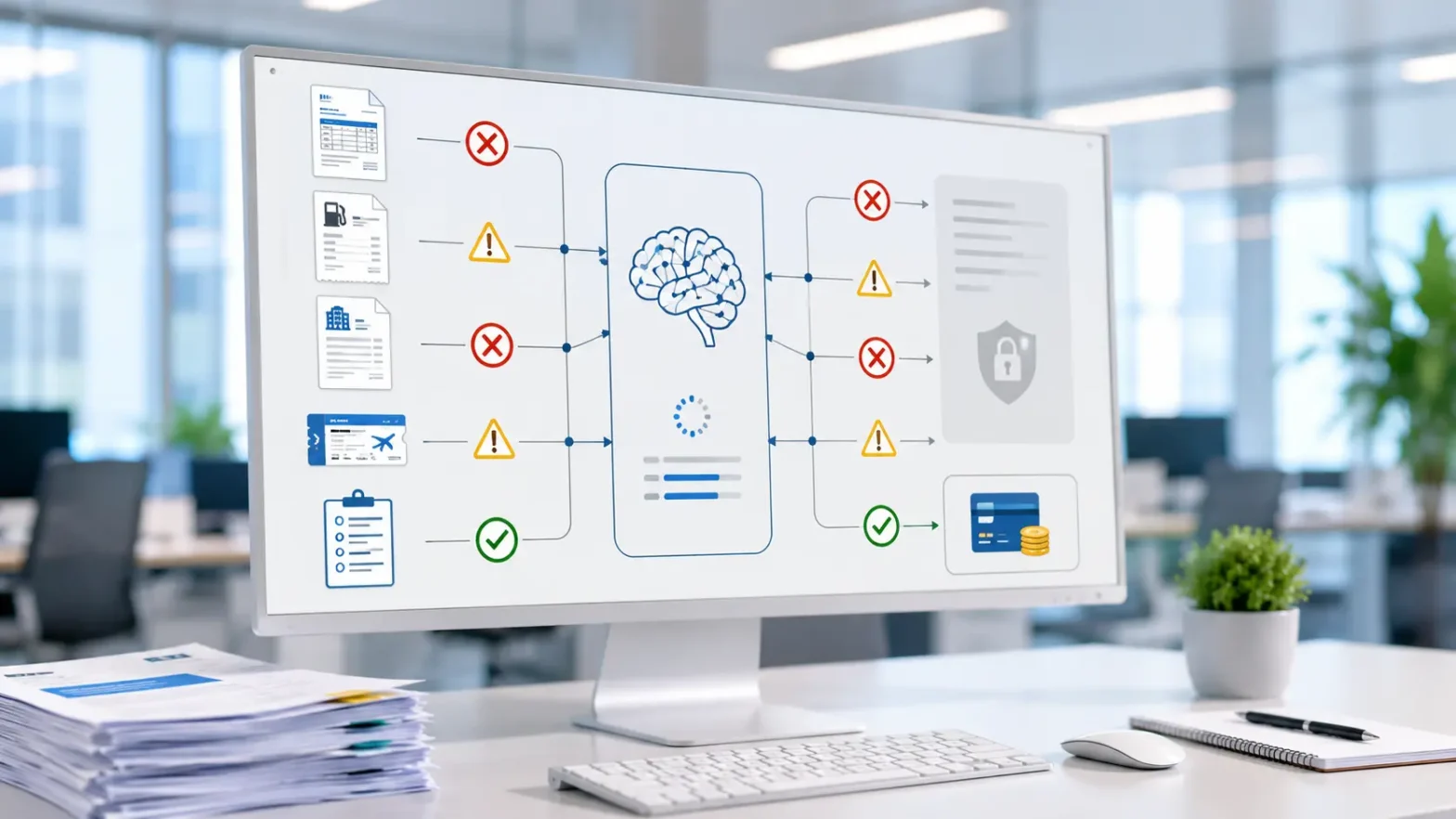
For financial leadership in a growing enterprise, managing travel and entertainment (T&E) and decentralized purchasing is often a constant source of inefficiency. Millions of dollars are processed monthly through paper receipts, corporate credit cards lacking dynamic limits, and spreadsheets requiring hours of manual review.
Category Archives: Corporate Finance
Beyond Traditional ERP: Optimizing Working Capital Through Predictive Algorithms

For a Chief Financial Officer (CFO), few metrics are as vital to corporate health as the Cash Conversion Cycle (CCC). Yet, across many enterprise organizations, millions of dollars in liquidity remain frozen in uncollected invoices simply due to a reliance on manual, reactive accounts receivable processes.
The Algorithmic Shield: How AI Protects High-Volume B2B Payments Against Modern Fraud

In today’s corporate financial landscape, a single intercepted or altered bank transfer can compromise millions of dollars and destabilize a multinational enterprise’s cash flow. As companies digitize their treasury departments and expand global vendor networks, attack vectors have become exponentially more sophisticated.
AI-Driven Treasury Management: The New Paradigm in Corporate Cash Optimization

In an era defined by rapid macroeconomic shifts and volatile liquidity corridors, traditional corporate treasury functions are undergoing a fundamental transformation. Legacy forecasting models, long dependent on historical spreadsheets and static data structures, are proving inadequate against real-time market fluctuations. Forward-thinking Chief Financial Officers (CFOs) and corporate allocators are aggressively transitioning toward decentralized, AI-driven automation architecture to secure absolute operational resilience.
Risk Mitigation in Corporate Finance: The Role of Specialized Commercial Insurance

For high-growth ventures and mid-market enterprises, scaling successfully involves more than just expanding market share or increasing revenue velocity. As corporate footprints grow, so does exposure to systemic, legal, and operational risks. In high-stakes business environments, strategic risk mitigation is a fundamental pillar of corporate finance that directly impacts valuation and long-term sustainability.