Beyond Traditional ERP: Optimizing Working Capital Through Predictive Algorithms
For a Chief Financial Officer (CFO), few metrics are as
Líder en desarrollo web, e-learning & redes sociales
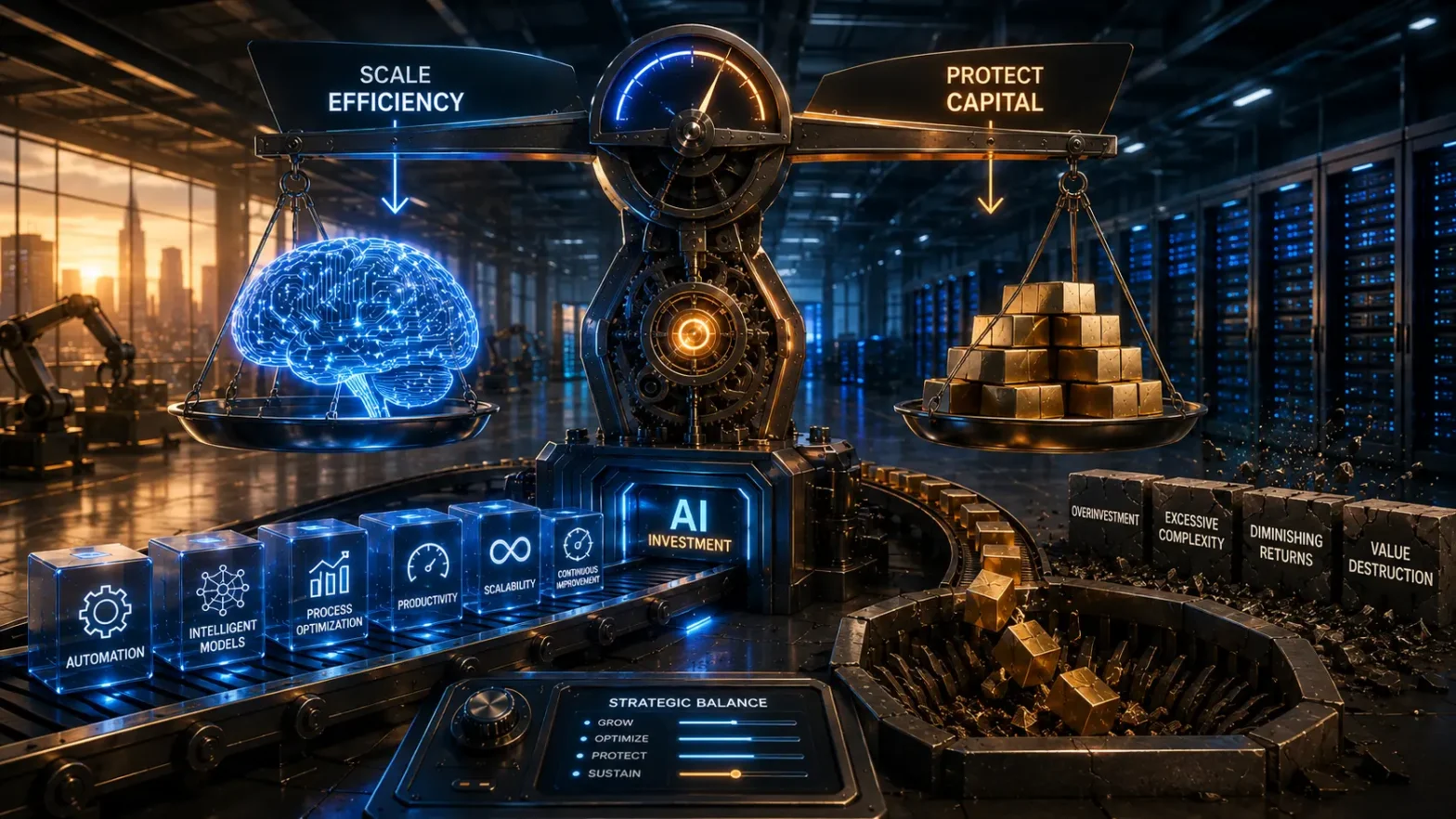
For executive leadership and board directors, evaluating the massive wave of Artificial Intelligence (AI) investment is no longer a matter of early adoption or technological fascination. The central strategic challenge is managing the paradox between the risk of falling behind and the strict mandate to demonstrate tangible financial returns against accelerating Capital Expenditure (CapEx).
Today, the corporate landscape has transitioned from unbridled enthusiasm to a phase of rigorous financial discipline. Winning organizations are not those purchasing the most expensive compute infrastructure, but those integrating automation directly into core operational workflows to measurably reduce costs or accelerate revenue.
To protect enterprise value and maintain capital efficiency, executive teams must enforce governance across four critical operational pillars.
One of the greatest risks in current capital allocation is the trap of the “eternal pilot”—proof-of-concept projects that consume compute resources, advisory fees, and internal bandwidth without ever deploying at commercial scale.
The Cost of Speculative Development: Building proprietary models or deploying generic tools without a clear operational use case generates recurring infrastructure expenses that directly drag on free cash flow.
Measurable P&L Contribution: AI investments must translate into concrete operational metrics: reduced labor hours per process, lower error rates in supply chain execution, or increased commercial conversion rates.
Executive Action: Enforce a strict “Zero Pilots Without a Business Case” policy. Every AI initiative must include a front-end ROI model identifying the exact line item on the Income Statement (P&L) it intends to optimize and within what precise timeframe.
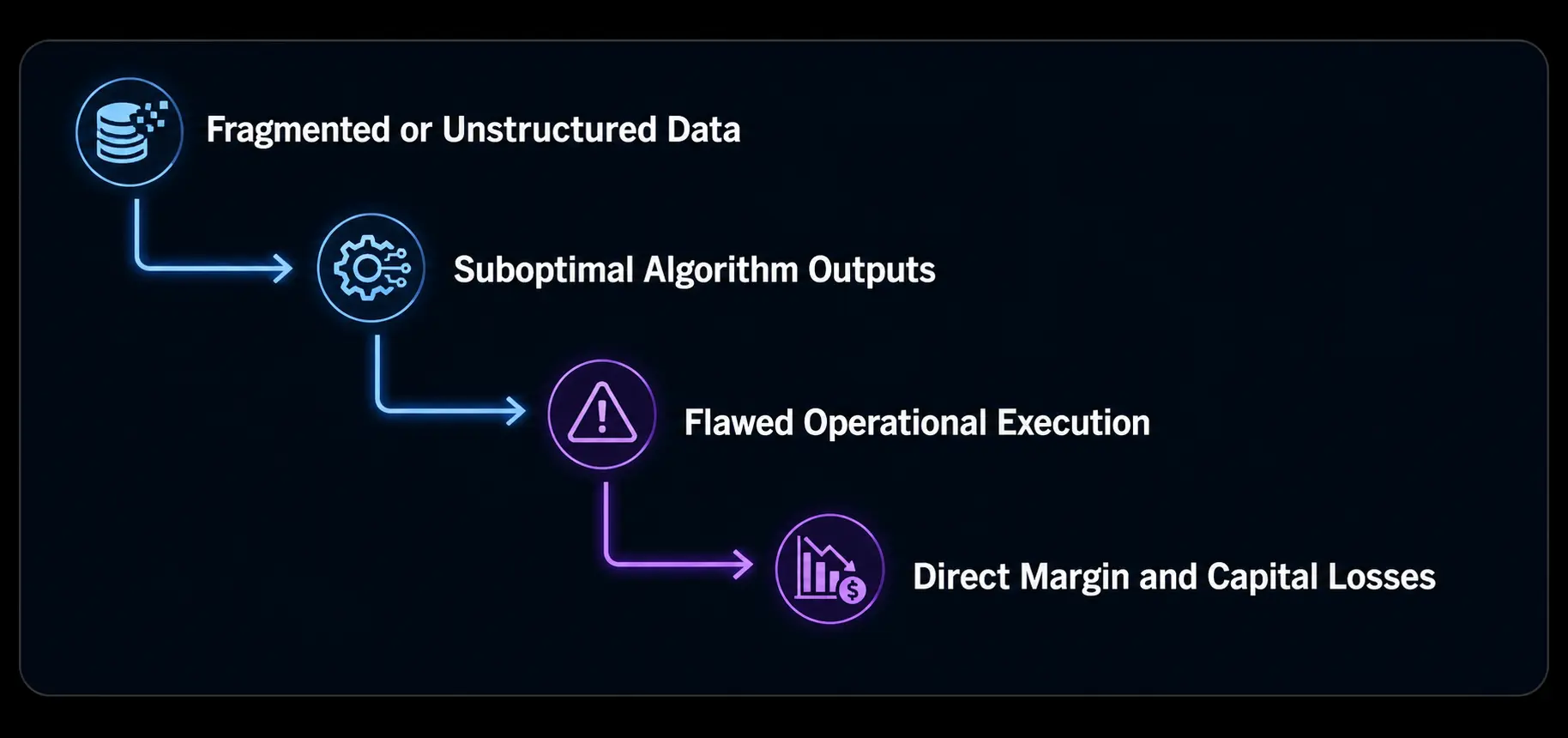
Capital allocation toward advanced generative models or predictive analytics yields diminished returns if the enterprise’s underlying data architecture is fragmented or unreliable. Corporate leaders are discovering that the primary operational bottleneck is rarely the algorithm, but the quality and accessibility of their own data.
Distorted Operational Decision-Making: Training or prompting algorithms with biased, incomplete, or outdated operational data scales execution errors across the enterprise.
IP Protection and Compliance Risks: Uncontrolled exposure of proprietary corporate data to public model environments creates unquantifiable legal and competitive liabilities.
Executive Action: Prioritize foundational data architecture and cleanup budgets before committing to high-cost AI software licenses. Establish secure, private enclaves to protect proprietary enterprise knowledge assets.
AI software investments do not yield automatic financial returns simply upon deployment. Realized value occurs only when underlying operational workflows are formally redesigned so human capital can be reallocated toward higher-value activities.
The Partial-Automation Fallacy: If an AI tool reduces the execution time of a business process by 50%, but operational headcount and overhead remain static, the efficiency gain is entirely absorbed as idle capacity.
Execution and Auditability: Realizing productivity gains requires middle management capable of auditing, refining, and scaling automated outputs within daily operations.
Executive Action: Pair every AI implementation with a formal Business Process Redesign (BPR) initiative. Track post-implementation productivity per employee and systematically reallocate saved capacity toward top-line growth or core client execution.
Unlike traditional SaaS business models with predictable fixed or seat-based pricing, advanced AI implementations carry variable operational costs tied directly to compute consumption (token usage, API calls, and storage scaling).
Unpredictable OpEx Surges: As internal adoption expands across business units, cloud infrastructure and API consumption costs can compound non-linearly.
Accelerated Model Obsolescence: The rapid pace of underlying model improvements requires flexible technical architectures that prevent long-term lock-in with a single vendor stack.
Executive Action: Mandate that IT and finance teams construct a 36-month Total Cost of Ownership (TCO) model for every AI deployment. Establish hard consumption caps on API usage and schedule recurring vendor reviews to optimize compute efficiency.
The expansion of corporate AI investment represents a structural evolution in business governance. The executive leaders who successfully navigate this cycle will not be those mesmerized by technological potential, but those who enforce unforgiving financial discipline, mandate data readiness, and execute rigorous process redesign to maximize return on invested capital.

For a Chief Financial Officer (CFO), few metrics are as
Moving away from static annual budgets toward continuous, data-driven resource

For executive leadership and board directors, evaluating the massive wave

For executive leadership and board members, analyzing quarterly earnings reports